On the Dutch day-ahead market, electricity cost an average of € 232.84 per MWh in the week of 26 October. A week had not been this expensive since December 2022. Gas for December closed at € 103.94 per MWh on Friday 30 October and fell by almost 9 percent on Monday 2 November. European gas storage has been emptying since 28 October and is at its lowest level ever for early November.

We like to keep you informed about developments in the energy market. Last week electricity was more expensive than in any week since December 2022. Gas rose above 100 euros on Friday and fell back on Monday. Below you can read what caused this, and why the Emirates are buying a stake in an Australian LNG plant and Qatar is buying LNG in America.
On the Dutch day-ahead market, electricity cost an average of € 232.84 per MWh from Monday 26 October to Sunday 1 November. A week earlier it was € 133.82. A week was last this expensive in December 2022. Thursday 29 October was the most expensive day, at an average of € 311.53. Between 17:00 and 18:00 electricity cost € 540.88 per MWh that day.
The average electricity price per day from 6 October to 4 November. Week 44 is blue; Thursday 29 October is the most expensive day at € 311.53.
After that the price stayed high. From Friday 30 October to Tuesday 3 November electricity cost about € 250 per MWh every day, including the weekend. Electricity is normally cheaper on Saturday and Sunday, because businesses use less then. A week earlier electricity cost just € 23.25 on Sunday.
The reason is the weather. It got colder and there was little wind. Wind turbines in the Netherlands produced 285 GWh of electricity in week 44, compared with 698 GWh a week earlier. That is 59 percent less. On Thursday evening 29 October, between 17:00 and 19:00, sun and wind together produced almost nothing, even though the Netherlands has more than 40,000 MW of solar panels and wind turbines. That is exactly when electricity was most expensive. Gas-fired power stations filled the gap: they produced 804 GWh, two and a half times as much as a week earlier. Coal-fired power stations also ran more. Gas-fired power stations are expensive because of the high gas price, and power stations also pay for every tonne of CO₂ they emit. That CO₂ price rose above € 90 per tonne on Monday 2 November, for the first time since January. Coal-fired power stations emit more CO₂ than gas-fired ones, so when they run more, the CO₂ price rises with them.
Over the whole of October electricity cost an average of € 171.83 per MWh. That makes it the most expensive month since December 2022, and more than double October last year (€ 82.43).
Germany wants to make sure there is enough electricity on evenings like these. That is why the country is paying companies to build new power stations and large batteries and keep them on standby, even if they rarely run. On Tuesday 3 November the German regulator announced who won the first round. Eleven projects, mainly from the energy companies RWE and LEAG, will together provide about 5,160 MW. For this they will receive a combined total of about 800 million euros a year for fifteen years. More than twice as much was offered as Germany needed, so the price came out more than a third below the maximum. On 10 November the regulator will announce the second round.
Gas for delivery in December cost € 96.54 per MWh on the TTF, the Dutch gas exchange, on Monday 26 October. On Wednesday 28 October the price closed at € 100.34 and on Friday 30 October at € 103.94. Gas last closed this high on 20 December 2022.
Gas for delivery in December on the TTF, closing price per trading day from 1 September to 3 November. On Friday 30 October gas closed at € 103.94, the highest closing price since December 2022.
On Monday 2 November the price fell to € 94.86, a drop of 8.7 percent in a single day. Gas had not fallen this sharply since April. The trigger was news about talks between the United States and Iran. Iran announced that its government may now negotiate with the United States itself; previously only the supreme leader was allowed to do so. In Doha, Iranian and Qatari negotiators met, and President Trump said he wanted to give the talks more time. Oil became almost 8 percent cheaper that day: a barrel of Brent for delivery in January fell from 113 to 105 dollars. On Tuesday 3 November the price swung back and forth sharply. Gas opened at just over € 98, briefly fell below € 88 in the afternoon and closed at € 91.60. That afternoon reports circulated that a deal between the United States and Iran was close. Iran denied this via the state broadcaster, and said the Strait of Hormuz will only reopen once the United States meets seven Iranian conditions. The same day President Trump announced that the United States had attacked air defences on the Iranian island of Qeshm, in the Strait of Hormuz, on Monday.
Gas for delivery the next day cost € 105.44 per MWh in the Netherlands on Sunday 1 and Monday 2 November. On Tuesday 3 November it was € 94.18 and on Wednesday 4 November € 92.13.
European gas storage was 74.6 percent full on 1 November. On the same day last year it was 82.8 percent, and in 2024 still 95.2 percent. Storage has never been this low on 1 November since measurements began in 2011. The previous low was 2021, at 77.1 percent.
Storage reached its highest level of the year on 27 October, 75.0 percent. That is the lowest peak since 2011; the previous record low was 77.3 percent in 2021. The date itself is normal: since 2011 the peak has come around 26 October on average. Despite the highest gas price in almost four years, no more gas was added after that. There is a reason for this: gas for December is much more expensive than gas for next year, so anyone storing gas now to sell it later earns nothing from it. Since 28 October more gas has been coming out every day than going in. On Sunday 1 November 890 GWh went in and 2,266 GWh came out. The heating season has therefore started, while storage is less full than ever.
The highest level of European gas storage per year, since 2011. This year it was 75.0 percent on 27 October, the lowest peak in the series.
In the Netherlands storage stands at 65.7 percent, compared with 73.0 percent last year. On 1 November more gas came out of Dutch storage than went in for the first time this autumn. Germany's target was for storage to be 70 percent full on 1 November. That was not achieved: German storage stands at 61.1 percent. The German Ministry of Economic Affairs does not expect a shortage this winter, because Germany can keep importing gas. A smaller buffer does make the price more sensitive to setbacks.
Germany is also arranging that gas itself. On 29 October the trading house Trafigura announced that it will supply more than 150 TWh of gas over the next five years to Sefe Energy, the German state-owned gas company. Sefe stands for Securing Energy for Europe. Until 2022 the company was called Gazprom Germania; after the Russian invasion of Ukraine, Germany took it over and gave it a new name. That is about 30 TWh a year, some 3.5 percent of the 864 TWh of gas Germany used in 2025. The first delivery was on 1 November. To finance it, Trafigura borrowed 1.5 billion dollars from nine banks, partly guaranteed by the German state. In the same week Sefe also signed a twenty-year contract: up to 1 million tonnes of LNG a year from Ksi Lisims LNG, a planned LNG plant on the west coast of Canada. Deliveries only start in the early 2030s, and the plant will only be built if there are enough buyers. With Sefe on board, 58 percent of the output has been sold.
The International Energy Agency wrote on 3 November that the tightness in the global gas market could last well into 2027. This year 3 percent less LNG will come onto the market than last year, almost 20 billion m³. Global LNG supply has never fallen this sharply. The LNG tankers from the Gulf were virtually idle from March to October. Extra LNG from North America and Africa, among others, made up about two thirds of that. At the same time the agency expects the world to use 1.5 percent less gas this year, because industry is running less and some Asian power stations are switching from gas to coal.
The agency also modelled what happens if the winter is colder than normal and the Strait of Hormuz stays closed. In that case, European gas storage could be less than 10 percent full by the end of March 2027. A cold snap or an outage would then be hard to absorb, because once a storage site is less than 30 percent full, less gas can be withdrawn from it per day. Europe would then have to buy extra gas in the summer of 2027 to refill storage, which could extend the tightness into next year.
ADNOC, the state oil company of the United Arab Emirates, closed two LNG deals on 3 November. The first: ADNOC Gas will supply France's TotalEnergies with up to 1.6 million tonnes of LNG over five years. Deliveries start this year. That is about 2.2 billion m³ of gas, spread over five years. For comparison: the Netherlands uses about 30 billion m³ of gas a year. ADNOC's LNG plant is on an island in the Persian Gulf. The LNG tankers therefore have to pass through the Strait of Hormuz, where ships are still being attacked.
The second deal says more. A subsidiary of ADNOC is buying Shell's stake in North West Shelf, Australia's largest LNG plant, for about 1.5 billion dollars. The plant can produce more than 14 million tonnes of LNG a year. This gives the Emirates LNG that does not have to pass through the Strait of Hormuz.
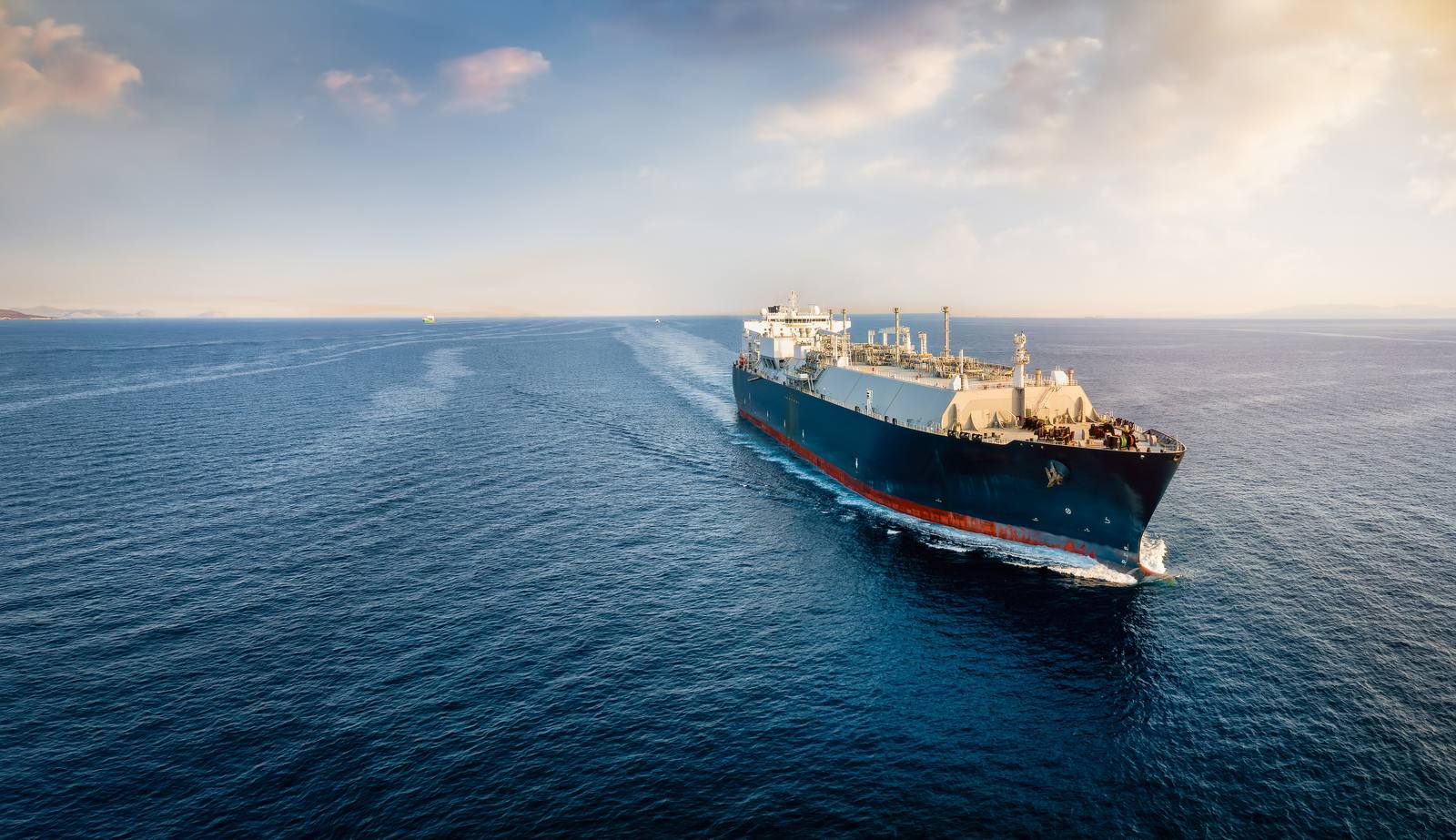
Qatar is doing the same. After two contracts with Cheniere, QatarEnergy signed at the end of October for 3 million tonnes of LNG a year for twenty years from Woodside, from a new plant in Louisiana. Those deliveries start in 2030 and 2031. This will make Qatar the largest buyer of American LNG. There is a reason for this: Qatar has no route out other than the Strait of Hormuz. All its LNG comes from one large complex, Ras Laffan. In March an Iranian missile hit two of the fourteen production trains there, together about 17 percent of what Qatar can export. Repairs will take about three years. Qatar also wants to sell that American LNG on. India's Petronet, the country's largest gas importer, asked Qatar to supply part of its contract from 2028 with American LNG, and Qatar is open to that. The large LNG countries in the Gulf are thus building a second supply route, in case the Strait of Hormuz closes again. For now that route is still needed: QatarEnergy is keeping the force majeure on its LNG deliveries, which began in March, in place until the end of December.
That the Gulf is still not safe became clear again last week. An LNG tanker from Qatar was attacked in the Strait of Hormuz. The ship was on its way to Pakistan, and Pakistan had specifically agreed with Iran that it could pass safely. So even an agreement like that offers no certainty.
Meanwhile more American LNG is coming to Europe. In October American LNG tankers carried 6.89 million tonnes to Europe, compared with 5.91 million tonnes in September. American LNG exports in October were the second highest ever. In October 28 LNG tankers arrived in the Netherlands, more than in any other month. In July there were still 12. Almost all that gas was needed straight away for consumption in North-West Europe; little was left over for filling storage.
For American gas producers that is good news. Gas in Europe and Asia now costs about twelve times as much as in the United States. The gap has never been this large, not even in 2022.
A barrel of Brent for delivery in January cost about 103 dollars on Wednesday morning 4 November. On Friday 30 October it was still 113 dollars. More oil is also coming out of the Gulf again. Saudi Arabia, the Emirates, Iraq and Kuwait together exported 15.5 million barrels a day in October, as much as at the start of this year. Because of an American naval blockade, Iran has not exported any oil for two months.
Europe is also drawing on its emergency stocks. Twelve EU countries are releasing a combined 42.6 million barrels of fuel from their strategic reserves until the end of January, half of it diesel.
On the forward market, where energy is traded for delivery in a later period, electricity for all of 2027 cost about € 148 per MWh on Wednesday morning 4 November. On Thursday 29 October it was still € 159.30. Gas for all of 2027 cost about € 72 per MWh, compared with € 77.50 on 29 October. Prices for 2028 are lower: about € 45 per MWh for gas and € 107 for electricity.
We expect prices to remain volatile this winter. Cold days with little wind make electricity expensive, as last week showed. A single report about the Strait of Hormuz can make gas and oil 8 to 9 percent cheaper or more expensive within a day, as on Monday. European storage is lower than ever, and that makes the market more sensitive to every piece of news.
Is your contract ending in the coming months, or would you like to know what these prices mean for your energy costs? Please get in touch. We follow the market daily and are happy to look at your situation with you.
Subscribe to our newsletter and never miss important news from the energy market.
We use your email address only for our newsletter and market updates. See our privacy statement.
We are happy to go through your energy situation with you and show you where the opportunities are. Free of charge and with no obligation.