On Monday 26 October, gas for delivery in November closed on the TTF, the Dutch gas exchange, at € 96.68 per MWh. That is the highest closing price since December 2022 and more than three times as much as in early January. Electricity for all of 2027 became almost 9 percent more expensive between 21 and 28 October. European gas storage stands at 74.9 percent, lower than ever at the end of October.

We like to keep you informed about developments in the energy market. The gas price rose further in the week of 19 October and on Monday 26 October came close to 97 euros. Electricity for next year also became considerably more expensive. Below you can read what caused this, what the European regulator writes about the coming winter and what could bring the price down again.
Gas for delivery in November cost € 88.04 per MWh on Monday 19 October. On Tuesday 20 October the price dipped briefly, after reports of mediation between the United States and Iran. After that it rose every day: € 90.04 on Thursday 22 October, € 93.85 on Friday 23 October and € 96.68 on Monday 26 October. During trading that Monday the price briefly reached € 97.35. Gas last closed this high on 21 December 2022. On 2 January this year, the same amount of gas cost € 29.00.
Gas for delivery in November on the TTF, closing price per trading day from 1 September to 27 October. On Monday 26 October gas closed at € 96.68, the highest closing price since December 2022.
On Monday 26 October the Saudi defence minister, the head of the Pakistani army and the head of Turkish intelligence travelled to Tehran. They agreed with the Iranian president to continue talks about security in the region. On Tuesday 27 October gas for November closed slightly lower, at € 96.06. On the morning of Wednesday 28 October the price rose to € 98.54, the highest level during trading since December 2022. Iran has previously said it will only negotiate with the United States once the American naval blockade is lifted.
Europe gets a large share of its gas as LNG by ship. Qatar supplied only 2 percent of all LNG in the world this summer, because its ships cannot safely pass through the Strait of Hormuz. Other countries, mainly the United States, Canada and Russia, produced more. Even so, 4 percent less LNG was available on the world market this summer than a year earlier.
Asia took most of Qatar's LNG, more than 80 percent in 2025, and is now missing it the most. With winter approaching, China, South Korea and India are buying extra cargoes. India imported more LNG in the third quarter than ever before. Asia is currently paying more for LNG than Europe, and the gap is bigger than ever. An LNG tanker that is not tied to a fixed contract sails to the buyer who pays the most. About 30 percent of Europe's LNG is bought this way, cargo by cargo, on the spot market. Often a trading house buys the cargo and sells it on, sometimes while the ship is already under way and then changes course. A tanker carrying American LNG that was heading for India in October was first diverted to the United Kingdom and then to Thailand. Europe therefore has to bid along to secure those cargoes.
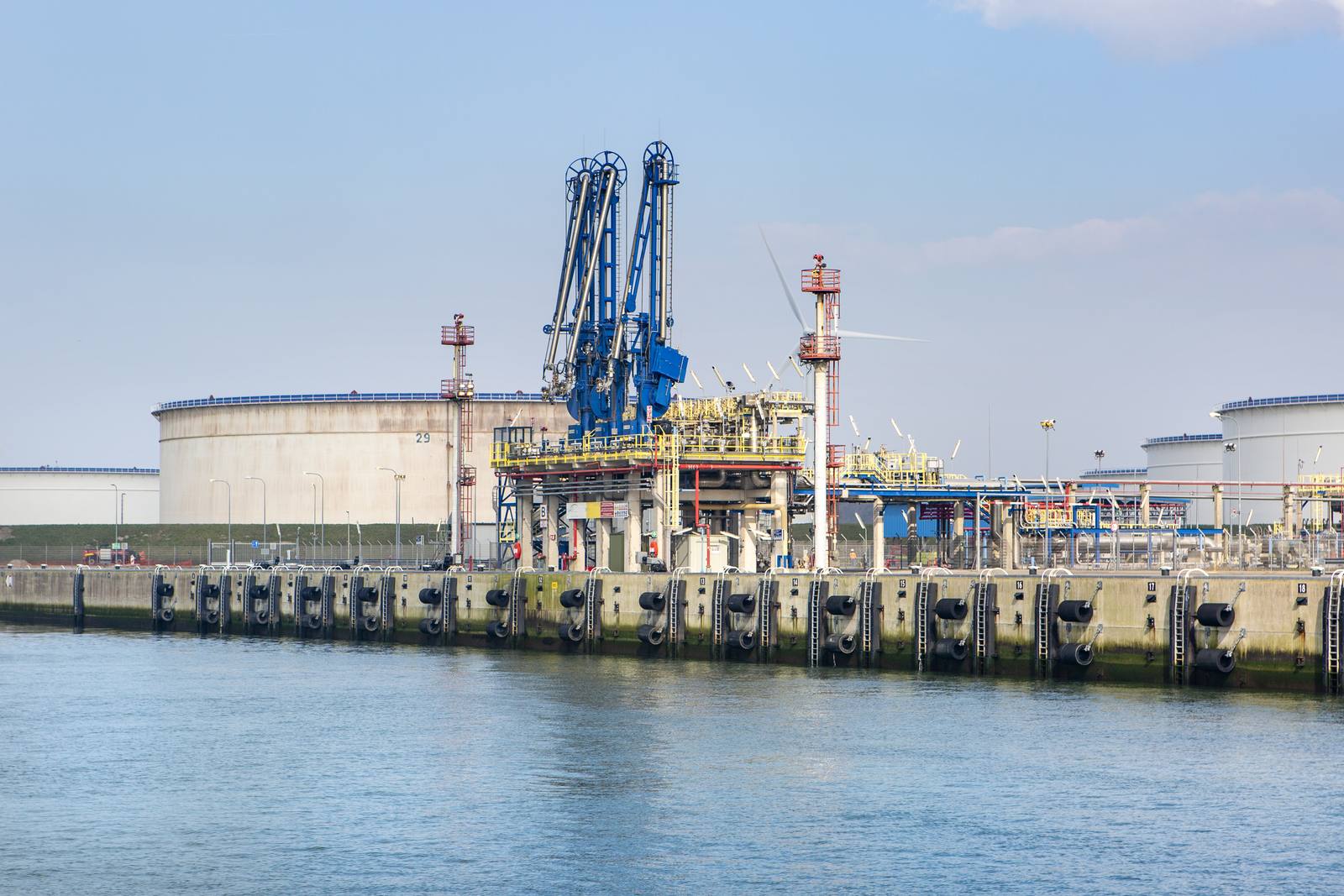
You can see how big that effect is from the price in the United States. That is where 64 percent of Europe's LNG came from this summer. On the American gas exchange Henry Hub, gas cost the equivalent of about € 8 per MWh on 26 October. On the TTF it was € 96.68 that same day, more than twelve times as much. Liquefying gas and shipping it to Europe costs less than € 20 per MWh in total. The rest of the difference arises because buyers in Europe and Asia are bidding against each other. In August more than 10 percent of all American LNG went to the Netherlands. Only Egypt received more.
Even Qatar is now buying American gas: on 22 October the state-owned company QatarEnergy signed a contract with Cheniere, the largest LNG producer in the United States. According to press reports, QatarEnergy is also negotiating with two other American LNG projects. Deliveries from Cheniere only start in 2031 and are small, but they show how strong the American position in the gas market has become.
On 25 October the European gas storage facilities were 74.9 percent full. On the same day last year it was 82.8 percent, and in 2024 still 95.2 percent. Storage has never been this low on 25 October. The previous low was 2021, at 77.1 percent. From 18 to 25 October only 0.30 percentage points were added across Europe. On some days more gas was already coming out of storage than going in. On other days gas was still being added, as on 26 October. Storage normally reaches its highest level at the end of October. Because of the high price, LNG cargoes keep coming to Europe, and filling may continue into November this year.
European gas storage on 25 October, per year since 2011. This year's level is the lowest in the series, below that of 2021.
In the Netherlands storage stands at 65.4 percent, compared with 72.5 percent last year. On 21 October the Dutch target of 64 percent was reached. That target was lowered this year. Normally, European storage has to be 90 percent full on 1 November.
The percentage does not tell the whole story. Since 2023 Europe has been using about a fifth less gas than before the 2022 crisis. On 25 October there was 849 TWh of gas in European storage. That is enough for about 35 percent of gas consumption in a winter like last year's. In 2019 it was about 37 percent and in 2021 about 29 percent, because more gas was used then. Last year it was 39 percent, and in 2024 still 45 percent. Before 2022 Europe could also fall back on extra Russian pipeline gas in winter. That option no longer exists, which is why the shortfall mainly has to be made up with LNG.
ACER, the European energy market regulator, published a review of the gas summer and an outlook for the winter on 27 October. European storage started the summer at 28 percent. Over the past nine years that averaged about 40 percent. Filling cost about 27 billion euros. According to ACER, the war in the Middle East made European gas imports 18 to 33 billion euros more expensive this summer.
If the winter is like last year's, Europe will need about 78 billion m³ of LNG. That much LNG has never come to Europe in a single winter. If less LNG arrives and storage drops to 15 percent, consumption will have to fall by 6 to 10 percent, according to ACER.
If the Strait of Hormuz reopens in early 2027, about 20 billion m³ of extra LNG from Qatar will come onto the market in the second half of the winter. Two damaged production trains in Qatar will remain out of service for years, however.
On the Dutch day-ahead market, electricity cost an average of € 133.82 per MWh in week 43, from 19 to 25 October. A week earlier it was € 187.86. Monday 19 October was the most expensive day of that week at € 207.25. The weekend of 24 and 25 October was windy and demand for electricity was low. On Saturday electricity cost an average of € 33.62, on Sunday € 23.25. On Sunday 25 October the price was below zero for 13 hours, for the first time since 10 October.
The average electricity price per day from 29 September to 28 October. In the windy weekend of 24 and 25 October the price fell; Wednesday 28 October is the most expensive day of the month at € 250.74.
Despite that windy weekend, electricity cost an average of € 160.89 per MWh from 1 to 28 October. That makes October the most expensive month since December 2022. In October last year the average was € 82.43.
On Wednesday 28 October electricity costs an average of € 250.74 per MWh, the most expensive day of October. Between 18:00 and 19:00 it is € 351.19. There is little wind and it is getting colder. Gas-fired power stations then produce a larger share of electricity, and they are expensive because of the high gas price and the CO₂ price of about € 88 per tonne.
A barrel of Brent, the benchmark for oil in Europe, cost 109.55 dollars on Monday 19 October. On Friday 23 October the price closed at 116.72 dollars, the highest closing price since 29 April. Early on Tuesday 27 October a fire broke out at Ras Tanura, Saudi Arabia's largest oil export port, which is also home to the country's largest refinery. The fire was quickly brought under control. How much damage there is, is not yet known. The Houthis in Yemen say they hit the refinery with a missile. Saudi Arabia reported that it had intercepted three missiles from Yemen. Brent closed at 113.88 dollars that day and was back at about 115 dollars on the morning of Wednesday 28 October.
Saudi Arabia is exporting as much oil as before the war again, much of it through the Strait of Hormuz. That is happening while more ships are being attacked around the strait than ever: 28 times up to and including 23 October, the highest number in a single month since the start of the war. In October 11 supertankers were damaged. From 1 to 21 October an average of 20.6 million barrels of oil and oil products a day came out of the whole Gulf. In February, before the war, it was 22.6 million. For oil products such as diesel, 37 percent less is still coming out of the Gulf than before the war. Russia exported less oil in October for the fourth month in a row, because Ukraine is attacking refineries and ports with drones. Russian refineries are recovering, though: in the second half of October they processed about a quarter more oil than in early October. Diesel remains expensive for now, and you notice that in transport costs and fuel surcharges.
On the forward market, where energy is traded for delivery in a later period, electricity for all of 2027 stood at € 155.59 per MWh on 28 October. On 21 October it was € 142.95. Gas for all of 2027 costs € 77.17 per MWh, compared with € 71.69 on 21 October.
Prices for 2028 are much lower: € 48.59 per MWh for gas and € 112.60 for electricity. The market expects a lot of new LNG to be added from 2027, mainly from the United States.
We expect prices to remain high this winter and to be able to move quickly. Cold weather with little wind pushes electricity and gas up, as can be seen on 28 October. For early November, weather models expect temperatures 2 to 3 degrees below normal across large parts of Europe. In the same days it will also turn cold in north-eastern China, so that Europe and Asia need more gas at the same time. Real agreements on safe passage through the Strait of Hormuz could bring prices down considerably.
Is your contract ending in the coming months, or would you like to know what these prices mean for your energy costs? Please get in touch. We follow the market daily and are happy to look at your situation with you.
Subscribe to our newsletter and never miss important news from the energy market.
We use your email address only for our newsletter and market updates. See our privacy statement.
We are happy to go through your energy situation with you and show you where the opportunities are. Free of charge and with no obligation.