Gas for delivery in November closed at € 87.22 per MWh on Tuesday 13 October. On Monday 5 October it was still € 73.51, a rise of 19 percent in just over a week. Gas has not been this expensive in almost four years. More ships are being attacked around the Strait of Hormuz than at any time since the start of the war, European gas storage is lower than ever for this date, and the weather models forecast cold and little wind for next week.

We like to keep you informed about developments in the energy market. The gas price rose sharply over the past week, to its highest level in almost four years. Below you can read why, what it does to the power price and the forward market, and what could bring the price down again in the coming weeks.
Gas for delivery in November cost € 73.51 per MWh on Monday 5 October. After that the price rose every trading day: € 78.08 on Wednesday, € 81.43 on Friday and € 87.22 at the close on Tuesday 13 October. Gas had not been this expensive since 22 December 2022, the last months of the energy crisis. Gas for later months and years rose as well.
Gas for delivery in November, closing price per trading day from 1 September to 13 October. From € 73.51 on Monday 5 October the price rose every trading day, to € 87.22 on Tuesday 13 October.
Three developments came together this week. The supply of LNG from the Middle East became less certain because of new attacks on ships. Europe starts the winter with the lowest gas stocks ever for this time of year. And the weather models forecast little wind in north-western Europe next week, with a chance of severe cold later in the week. When there is little wind, gas-fired power stations have to produce more power. When it is cold, households and businesses use more gas for heating. This winter that gas has to come from storage that is lower than ever.
LNG is natural gas that has been cooled to 162 degrees below zero. It then becomes liquid and takes up six hundred times less space, so it can be transported by ship. Part of the LNG for the world market comes from Qatar and the United Arab Emirates, and those ships have to pass through the Strait of Hormuz.
Over the past week more ships were attacked around that strait than in any week since the start of the war. On Tuesday 6 October only seven cargo ships passed through, the lowest number since 23 July. Over the past seven days, on average just over half as much oil came out of the Gulf as before the war, and on Monday 12 October only a quarter. At least ten empty oil tankers on their way to Fujairah, a port in the United Arab Emirates just outside the strait, have stopped or turned back. Smaller tankers shuttle back and forth through the strait and transfer their oil to large tankers at Fujairah. Those large tankers then carry the oil to buyers in Asia and Europe. If fewer large tankers come to Fujairah, the smaller tankers wait longer with their cargo and less oil comes out of the Gulf. Qatar is keeping at least twelve LNG tankers ready in the Gulf to keep gas deliveries going.
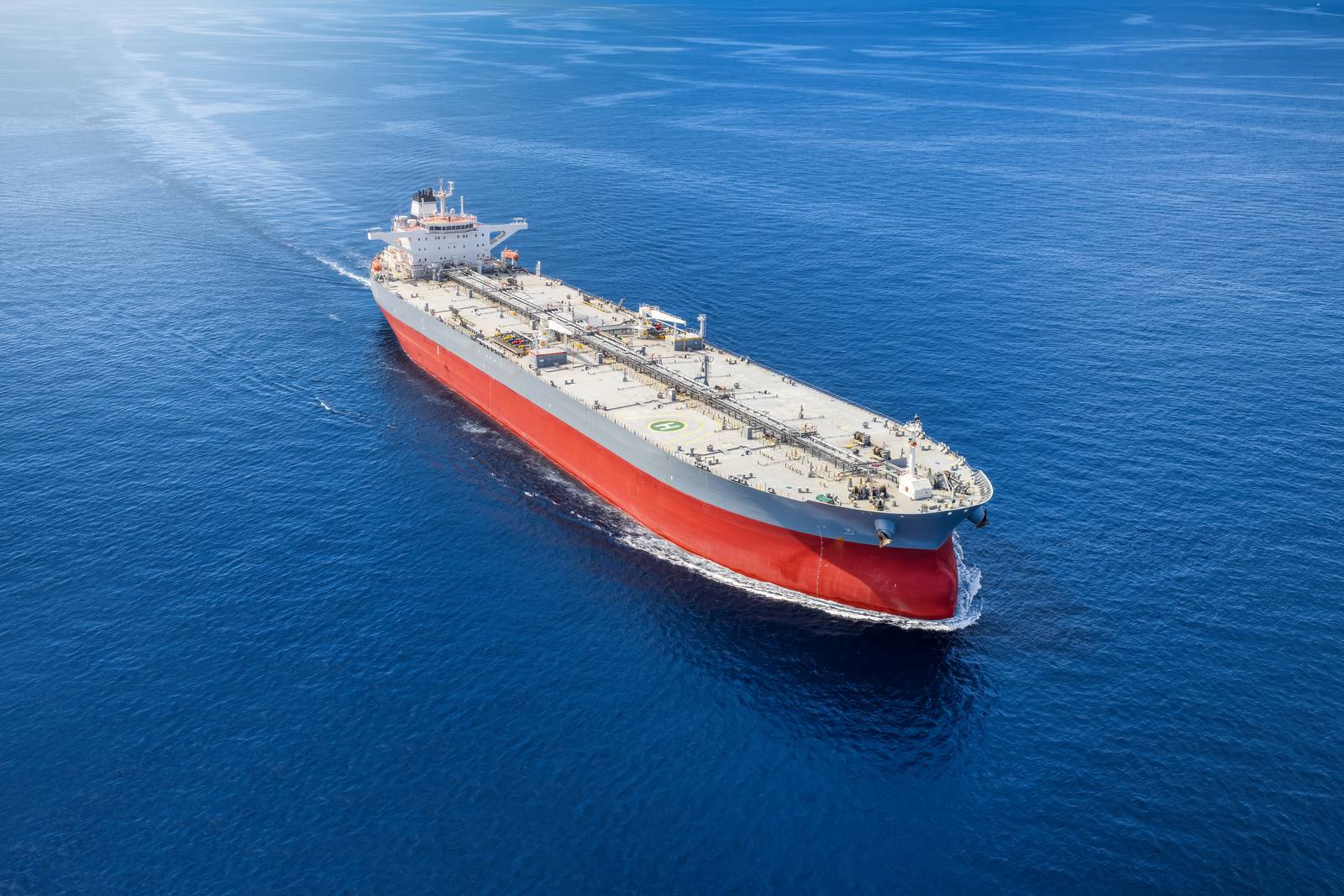
LNG tankers sail to the buyer who pays the most. Over the past week several tankers that were on their way to Asia changed course and went to Europe. To bring in those cargoes, Europe has to pay more than Asia. This pushes up the gas price in Europe.
European gas storage was 73.9 percent full on 12 October. On the same day last year it was 83.2 percent, and in 2024 still 95.0 percent. The previous low for this date was 2021, at 77.0 percent. In the Netherlands storage is at 63.0 percent, against 71.9 percent last year. Only in 2021 was the Dutch level lower on this date, at 61.7 percent.
European gas storage on 12 October, per year since 2011. This year's level is the lowest in the series, below that of 2021.
Filling continues. In the Netherlands about 0.3 percentage points are added each day. The filling season runs until 1 November, and with the first cold days gas is already being taken out of storage. Every report of a cold week or a disappointing delivery from Norway therefore feeds straight into the price. On 7 October a gas facility in Norway was temporarily out of action.
In September 18 LNG tankers arrived in the Netherlands, 13 of them with gas from the United States, 2 from Russia, 2 from Trinidad and Tobago and 1 from Peru. Russian LNG may still come in under long-term contracts until 1 January.
The Norwegian gas producer Equinor will supply Eneco with 9 TWh of gas a year for five years from 1 October. That is enough gas for all of Eneco's households and small business customers in the Netherlands. The gas comes by pipeline from Norway, with no tanker and no strait along the way. The price has not been disclosed.
On the Dutch day-ahead market, power cost € 138.15 per MWh on average in week 41, from 5 to 11 October. The difference between the days was large. On Saturday 10 October it was very windy and power cost € 50.69 per MWh on average, with three hours below zero. Monday 12 October was calm and the average was € 197.06. For today (14 October) it is € 193.10, with a most expensive hour of € 310.70.
The average power price per day from 15 September to 14 October. In week 41 the average was € 50.69 on Saturday 10 October and € 197.06 on Monday 12 October.
As soon as there is little wind and the sun has set, gas-fired power stations produce most of the power. They become more expensive because of the gas price and the CO₂ price. Power stations pay for every tonne of CO₂ they emit. On Monday that price stood at € 88.34 per tonne, the highest level since January. A still, cold week like the one the weather models now forecast therefore means above all expensive evening hours.
Oil that can be delivered right away is considerably more expensive than oil for delivery in a month. A barrel of Brent, the benchmark for oil in Europe, cost around 130 dollars for immediate delivery yesterday (13 October). On the forward market, for delivery in a month, it was about 106 dollars. That difference of almost 25 dollars means that little oil is available right now, and that buyers pay a substantial premium to get that oil immediately. On the forward market the price briefly fell below 100 dollars last week. Exports of crude oil from the Gulf have largely recovered, but only at high cost. A large oil tanker earns its owner more than 500,000 dollars a day on average this quarter, three times as much as in the previous quarter. Within seven to eight weeks Saudi Arabia will make room for an extra 1.2 million barrels a day through a pipeline to the Red Sea, bypassing Hormuz. For businesses, transport costs and fuel surcharges therefore remain high.
Diesel also remains scarce in Europe. Russian diesel has not been allowed into Europe since February 2023, and Ukrainian attacks on Russian refineries mean there is also less Russian diesel for sale elsewhere. China halted fuel exports in October, and in September less diesel came to Europe than in any previous September. Last week the United States agreed a deal with Russia to buy a large quantity of Russian diesel, and eased sanctions to do so. That diesel is intended for the American market, where the diesel price reached a record. We do not expect the deal to lower the diesel price in Europe noticeably. At the same time President Trump announced a ceasefire in which Russia and Ukraine no longer attack each other's energy facilities. Shortly afterwards Russia attacked power stations in Kyiv and Kharkiv again.
On the forward market, where energy for delivery in a later period is traded, prices rose further this week. Gas for the whole of 2027 costs € 68.27 per MWh this morning (14 October), against € 62.27 a week earlier. Power for the whole of 2027 costs € 145.20 per MWh, against € 131.53 a week earlier.
We expect the price in the coming weeks to be driven mainly by the weather. According to the weather models, the winter in Japan, South Korea and parts of China will be mild. Those are the three largest LNG buyers in the world, and lower demand there frees up cargoes for Europe. Shipping LNG between the United States and Europe is also much cheaper than earlier this year, because more ships are available. If the cold next week turns out milder than expected, the gas price may lose part of this week's rise again.
Is your contract ending in the coming months, or would you like to know what these prices mean for your energy costs? Please get in touch. We follow the market daily and are happy to look at your situation with you.
Subscribe to our newsletter and never miss important news from the energy market.
We use your email address only for our newsletter and market updates. See our privacy statement.
We are happy to go through your energy situation with you and show you where the opportunities are. Free of charge and with no obligation.