On Tuesday 20 October, gas for delivery in November briefly cost € 90.24 per MWh on the TTF, the Dutch gas exchange, the highest price since December 2022. After reports of mediation between the United States and Iran, the price closed at € 85.06. On Wednesday 21 October it hovered around € 88. The attacks on ships around the Strait of Hormuz continue, and European gas storage is lower than ever for this date.

We like to keep you informed about developments in the energy market. On 20 October the gas price briefly rose above 90 euros, and electricity and oil also became more expensive. Below you can read what caused this, where gas storage stands and what could bring the price down again.
In the Netherlands gas is traded on the TTF, the gas exchange where energy companies and traders buy and sell gas. The price set there is the benchmark for gas across Europe. Gas for delivery in November closed on the TTF on Tuesday 13 October at € 87.22 per MWh. After that the price stayed around that level: € 87.55 on Friday and € 88.04 on Monday. On Tuesday 20 October the price rose during trading to € 90.24, the highest price since December 2022. That same afternoon there were reports that mediation is taking place between the United States and Iran. The price then fell back and closed at € 85.06. On Wednesday 21 October the price hovered around € 88.
Gas for delivery in November on the TTF, closing price per trading day from 1 September to 20 October. On Tuesday 20 October gas briefly cost € 90.24 during trading; the closing price was € 85.06.
That reaction shows how sensitive the market is. A single report about talks takes five euros off the price within a few hours. As long as no agreements are reached, the price can rise again just as quickly.
The LNG tankers from Qatar and the United Arab Emirates have to pass through the Strait of Hormuz, the narrow strait between the Gulf and the open sea.
Around that strait, some 30 ships were attacked in the first three weeks of October, a fifth of all attacks since the start of the war. More often than before, this happens with missiles instead of drones. A missile causes more damage, so a ship that is hit can be out of service for months. Around 20 October two tankers were attacked off the coast of Saudi Arabia. Even so, more ships are passing through the strait again: in the week up to and including 18 October the number of oil tankers was back at 82 percent of normal. They sail along the coast of Oman under American protection.
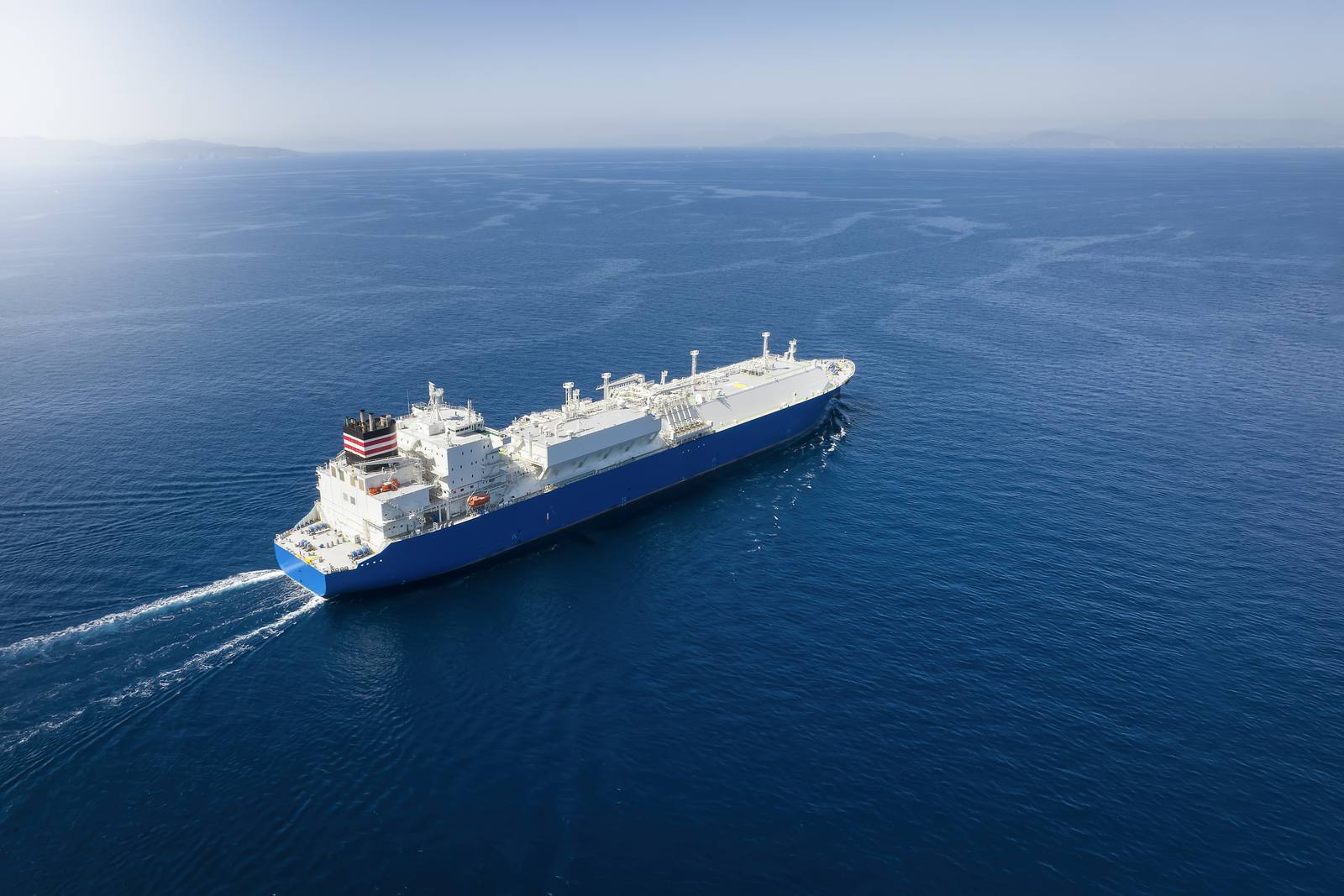
In September Qatar delivered no LNG to Europe for the fifth month in a row. Around 19 October, for the first time since January 2024, an LNG tanker from Qatar sailed through the Red Sea towards Europe, with Poland as its destination. Since 2024 ships from the Gulf have sailed around Africa, because the Houthis in Yemen attack ships in the Red Sea. The route through the Red Sea and the Suez Canal saves about two weeks of sailing. It is not yet clear whether this is the first of more ships.
Asia also wants more LNG. India and China are buying extra cargoes, and LNG in Asia now costs more than 30 dollars per mBtu, the unit in which LNG is traded. That is the highest price in four years. Converted, the TTF price comes to about 29 dollars. Asia is therefore paying slightly more, and an LNG tanker sails to the buyer who pays the most. In the United States, where most of Europe's LNG comes from, gas costs about 3 dollars per mBtu.
On 19 October the European gas storage facilities were 74.6 percent full. On the same day last year it was 82.8 percent, and in 2024 still 95.2 percent. Storage has never been this low on 19 October. The previous low was 2021, at 77.2 percent. In the Netherlands storage stands at 64.7 percent, compared with 71.7 percent last year. That is slightly higher than in 2021, when it was 61.6 percent.
European gas storage on 19 October, per year since 2011. This year's level is the lowest in the series, below that of 2021.
Filling is getting slower and slower. From 12 to 19 October only 0.65 percentage points were added across Europe. On 19 October 1,216 GWh of gas went into storage and 1,072 GWh came out again. With the first cold weather, gas is already being taken out of storage in some places while it is still being topped up elsewhere. Storage is normally at its fullest at the end of October, but that moment falls somewhere between 9 October and 13 November each year. This year filling will probably continue into November. Because of the high price, extra LNG tankers are coming to Europe and businesses are using less gas.
LNG supply is increasing, though. From 1 to 20 October about 8 percent more LNG came to Europe than in the same period of September, and on Monday 19 October supply was the highest since August. In September 68 percent of the EU's LNG came from the United States and 11 percent from Russia. From 1 January 2027 Russian LNG may no longer enter the EU. Norway remains the largest supplier of gas to the EU, with 36 percent of all imports, by pipeline and as LNG. Because of maintenance, Norway produced 12.6 percent less gas in September, 298 million m³ a day. The maintenance season ended at the end of September. A fault at the Norwegian gas processing plant at Kårstø, which meant 12.6 million m³ less gas a day, has also been resolved.
On the Dutch day-ahead market, electricity cost an average of € 187.86 per MWh in week 42, from 12 to 18 October. A week earlier it was € 138.15. Friday 16 October was the most expensive day of the month, at an average of € 212.76. Since Saturday 10 October the electricity price has not dropped below zero for a single hour. Over the first twenty days of October, electricity cost an average of € 170.58 per MWh. That is more than in any month since the end of 2022.
The average electricity price per day from 22 September to 21 October. Friday 16 October was the most expensive day of the month at € 212.76.
In October the sun shines for shorter periods and lower in the sky. As a result, gas-fired power stations now produce a larger share of electricity during the day as well, not only in the evening. Gas-fired power stations are expensive because of the high gas price and the CO₂ price, which stands at around € 85 per tonne. Power stations pay for every tonne of CO₂ they emit. For the rest of week 43, changeable autumn weather was forecast, with more wind towards the weekend. On windy days the electricity price can turn out considerably lower.
A barrel of Brent, the benchmark for oil in Europe, cost 105.69 dollars on 13 October. On Friday 16 October the price closed at 109.86 dollars, the highest level since mid-September. On Tuesday 20 October Brent briefly rose above 111 dollars during the day and closed at 108.79 dollars. Even so, more oil came out of the Gulf than before the war: 24 million barrels a day in the week up to and including 18 October, compared with 23.3 million before. Saudi Arabia and the United Arab Emirates send 40 percent of their oil around the Strait of Hormuz by pipeline, up from 17 percent in February. Tankers that do have to pass through the strait transfer their oil to another ship in the Gulf of Oman. The system works, but it is expensive. Shipping oil to China by supertanker costs 37 dollars per barrel of oil, a record. A supertanker carries about 2 million barrels, so a single voyage costs around 74 million dollars. Before the war it was a few dollars per barrel of oil. Over the course of the war, insurance against war damage has risen from less than 3 to 10 percent of the value of the ship.
Diesel remains the biggest problem. China no longer exports fuel and less diesel is coming from the Gulf because of the attacks on tankers. Transport has also become much more expensive: chartering a tanker costs more than ten times as much as normal. Refineries in Rotterdam lost money on every barrel of oil they processed in early October. The United States has suspended sanctions against buyers of Russian oil and gas, partly to get more Russian diesel onto the market. Russia then lifted its ban on diesel exports, and the first tankers with Russian diesel are sailing to Turkey and Brazil again. We do not expect this to noticeably lower the diesel price in Europe. For businesses, transport costs and fuel surcharges remain high.
On the forward market, where energy is traded for delivery in a later period, gas for all of 2027 stood at € 72.34 per MWh on 21 October, compared with € 68.34 a week earlier. In the week of 12 October gas for 2027 closed above € 70 for the first time. Electricity for all of 2027 costs € 142.95 per MWh, compared with € 145.20 a week earlier.
Prices for 2028 are much lower: € 45.21 per MWh for gas and € 106.61 for electricity. The market expects a lot of new LNG to be added from 2027. In the United States, LNG plants are being built that together could supply about 30 percent of European gas consumption by the end of 2027. In 2025 Qatar and the United Arab Emirates together supplied 20 percent of all LNG in the world, but only 3 percent of all gas, because most gas travels by pipeline. Other countries already made up for three quarters of the loss this spring.
With a normal winter, European gas storage is expected to stand at around 23 percent at the end of March. In a cold winter that could be 12 percent, lower than ever, and the gas price could rise above € 100 per MWh.
We expect prices for the coming winter to remain high, with large swings in both directions. A cold week or a new attack on ships pushes the price up. Real agreements between the United States and Iran about the Strait of Hormuz could bring it down considerably.
Is your contract ending in the coming months, or would you like to know what these prices mean for your energy costs? Please get in touch. We follow the market daily and are happy to look at your situation with you.
Subscribe to our newsletter and never miss important news from the energy market.
We use your email address only for our newsletter and market updates. See our privacy statement.
We are happy to go through your energy situation with you and show you where the opportunities are. Free of charge and with no obligation.