European gas storage was 72.8 percent full on 5 October. The level on that date has never been this low since measurements began in 2011. Qatar is supplying less LNG than normal this winter, and on 1 January the supply of Russian LNG under long-term contracts also stops. As a result Europe depends largely on American cargoes, and has to outbid Asia for them. Power cost € 183.75 per MWh on average in the first six days of October.

We like to keep you up to date on developments in the energy market. Europe is starting the heating season with the lowest gas reserves ever for this time of year, while two major LNG suppliers are delivering less this winter. Below you can read what is happening in the gas, power and oil markets, and what that means for the coming months.
European gas storage was 72.8 percent full on 5 October. On the same day last year it was 82.9 percent, and in 2024 still 94.4 percent. Since measurements began in 2011 the level in early October has never been this low. The previous low was 2021, at 75.9 percent. In the Netherlands storage stands at 60.7 percent, against 71.4 percent last year. Only in 2021 was the Dutch level lower on this date.
European gas storage on 5 October, per year since 2011. This year's level is the lowest in the series, below that of 2021.
Filling continues, at around 0.35 percentage points a day in the Netherlands. That pace will slow in the coming weeks. Temperatures are falling towards normal levels for October, so households and businesses will use more gas for heating. In addition, since late September the Bergermeer gas storage facility can temporarily deliver around 185 GWh a day less gas. As a result the Dutch gas market has less room to absorb a cold spell.
The gas price for delivery the next day has moved between € 70 and € 76 per MWh since late September. On 6 October it was € 73.70, against € 83.94 at the peak on 15 September. The supply of LNG is keeping the price in check for now. On Sunday 4 October almost 900 GWh of LNG arrived in the Netherlands, a record for a single day. Between 26 September and 7 October thirteen LNG tankers are berthing in Dutch ports. In addition, the expansion of the Gate LNG terminal on the Maasvlakte has been completed. This allows the Netherlands to turn an extra 4 billion m³ of LNG back into natural gas each year.
The gas price for delivery the next day, per day from 15 August to 6 October. After the peak of € 83.94 on 15 September the price fell to € 73.70 on 6 October.
Before the war Qatar was one of the three largest LNG suppliers in the world. In the attack on the Ras Laffan export complex in March, 17 percent of capacity was damaged, and repairs may take up to three years. The world's largest LNG buyers do not expect supply from Qatar to return to its old level this winter. Qatar's share of global LNG trade has fallen to a few percent. In September, 19 LNG tankers sailed out of the Strait of Hormuz, 13 from Qatar and 6 from the United Arab Emirates. That is the highest number since the start of the war, but still around 80 percent fewer than the roughly 86 cargoes a month before it. Qatar also extended force majeure on six cargoes to an Italian energy supplier until December.
The United States now supplies around a third of all LNG in the world and 63 percent of the LNG the EU imports. An American cargo has no fixed destination and goes to the buyer who pays the most. In September 5.4 million tonnes of American LNG went to Europe and Turkey, and 2.7 million tonnes to Asia, against 4.2 million tonnes in August. So Europe bid more. That difference has become small: at the end of September Europe was paying only around 0.30 dollars per MMBtu more than Asia. Asian buyers are now paying 25 to 28 dollars per MMBtu, and Chinese companies are once again negotiating new long-term contracts with American suppliers.
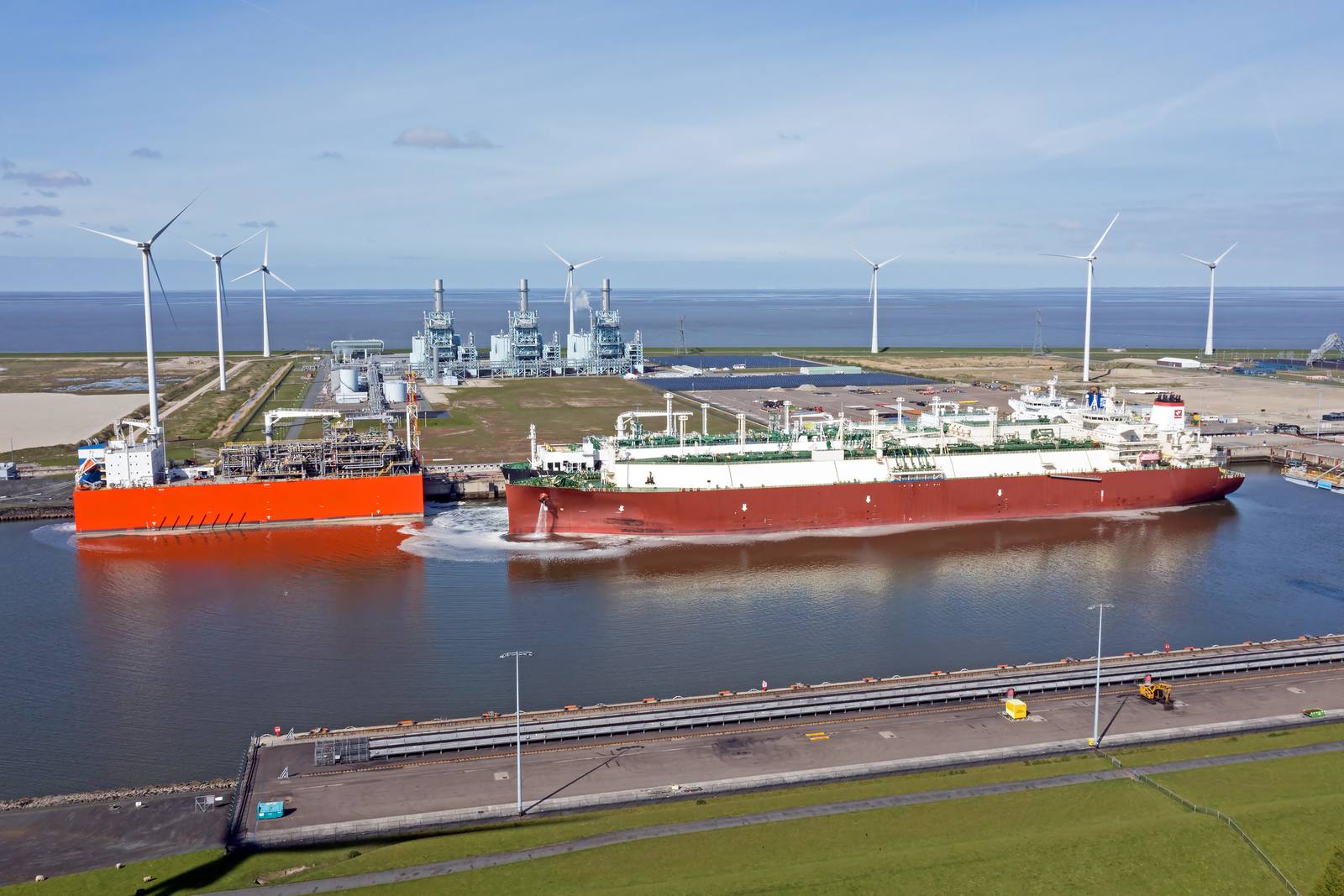
On 1 January 2027 the European ban on Russian LNG under long-term contracts takes effect. Short-term contracts have been banned since 25 April. From January to September Europe still bought 11.14 million tonnes of Russian LNG, mainly via France, Belgium and Spain. On an annual basis Europe has to find around 15 million tonnes elsewhere. That makes it even more dependent on American cargoes, and therefore more exposed to an outage or hurricane on the US Gulf Coast.
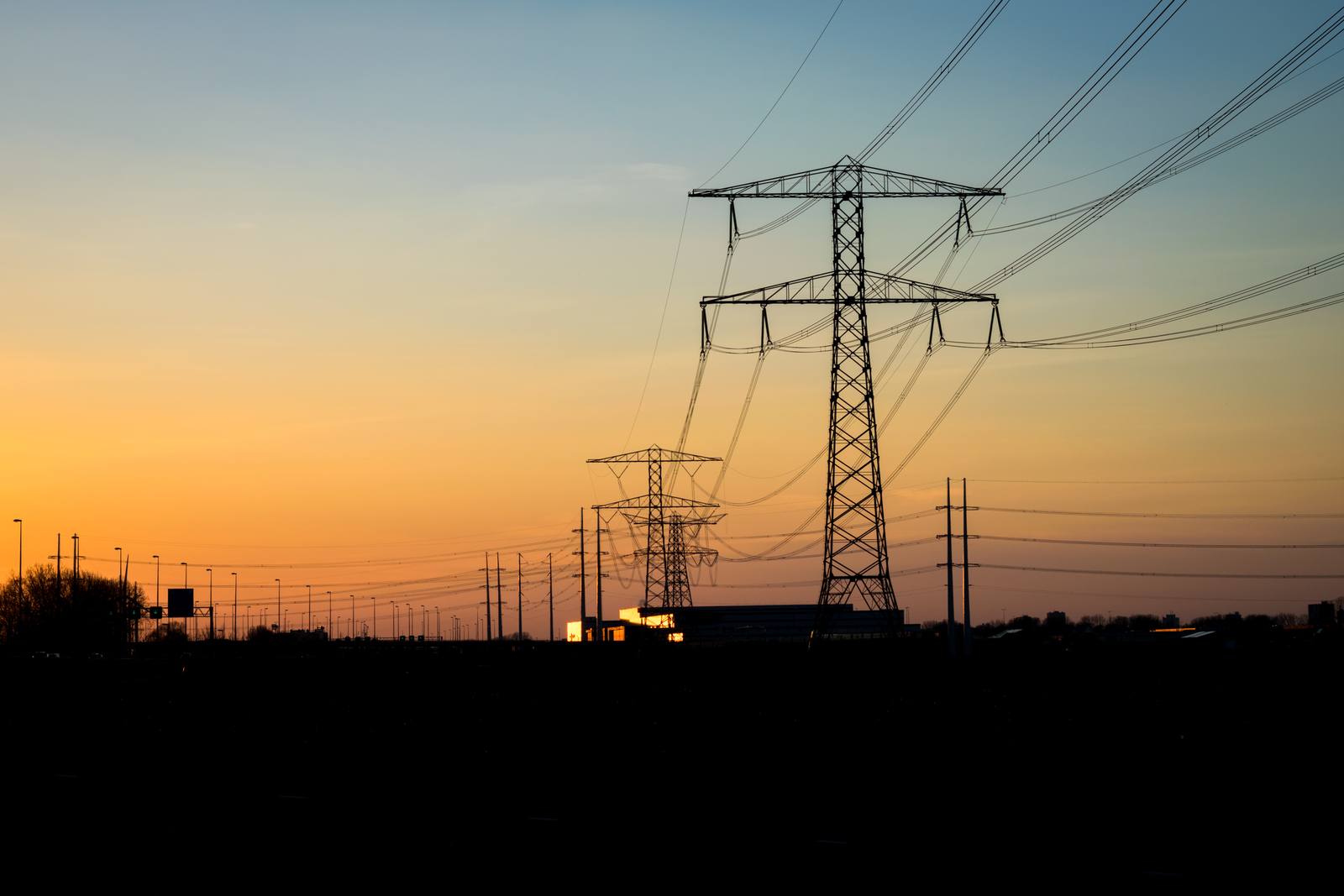
Power cost € 183.75 per MWh on average in the first six days of October. Before that, week 40, from 28 September to 4 October, was already the most expensive week of 2026, at an average of € 178.18 per MWh. The most expensive hour falls at 19:00 every day. On Tuesday 6 October a megawatt hour cost € 378.84 at that moment, while on Monday at 13:00 power still cost € 30.20. There was little wind this week, and as soon as the sun sets gas-fired power stations have to cover most of the demand. They are expensive because of the gas price and a CO₂ price of around € 87 per tonne. Coal-fired power stations are currently earning good margins, while gas-fired plants are barely making any. As a result, more coal-fired plants are running in Europe.
The power price per hour from Monday 28 September to Tuesday 6 October. The price is highest in the evening every day, on Tuesday 6 October € 378.84 at 19:00.
The number of hours with a negative power price is lagging behind this year. Up to and including 5 October there were 388, against 574 in the same period last year. Because of the higher price level, power drops below zero less quickly, even on sunny afternoons.
Exports of crude oil through the Strait of Hormuz are back at around 80 percent of pre-war levels. Tankers sail in convoys along the coast of Oman. For diesel, petrol and kerosene the figure is around 50 percent, because some of the refineries in the Gulf are still damaged. The G7 countries are therefore releasing 100 million barrels of oil and diesel from their strategic reserves. Even so, a barrel of Brent rose back above 100 dollars on Friday, after the United States announced it would send a third aircraft carrier and around 10,000 additional troops to the Middle East.
Oil that can be delivered now is considerably more expensive than oil for delivery in a month. A barrel of Brent, the benchmark for Europe, costs around 127 dollars for immediate delivery, against 103 dollars on the futures market. Transport also became more expensive: the hire of a medium-sized oil tanker between the US and Europe rose by 150 percent in a week. For businesses this means that transport costs and fuel surcharges will remain high in the coming months.
On the forward market, where energy for delivery in a later period is traded, prices rose this week. Gas for the whole of 2027 cost around € 62.40 per MWh this morning (7 October), against € 55.20 a week earlier. Power for the whole of 2027 closed yesterday (6 October) at € 131.53 per MWh, against € 126.78 a week earlier. The rise is mainly driven by gas: LNG supply remains uncertain and storage is low, and that feeds through to the power price via gas-fired power stations.
We expect prices for the winter to stay high and to react quickly to the weather. A cold spell increases demand at a time when reserves are already low, and then Europe has to compete with Asia for every extra cargo. A mild winter could instead bring prices down.
Is your contract ending in the coming months, or would you like to know what these developments mean for your energy costs? Then get in touch with us. We follow the market daily and are happy to look at it with you.
Subscribe to our newsletter and never miss important news from the energy market.
We use your email address only for our newsletter and market updates. See our privacy statement.
We are happy to go through your energy situation with you and show you where the opportunities are. Free of charge and with no obligation.