Power for delivery the next day cost € 152.21 per MWh on average in September. No month since December 2022 has been this expensive. Gas, by contrast, got cheaper this week: from € 79.84 on Monday 21 September to € 73.70 today. Power stays expensive because of the drought. Rivers in Europe are so low that hydropower and nuclear plants produce less power, and the expensive gas-fired plants have to step in more often. On top of that, the government wants energy suppliers to fill the gas storage sites themselves from now on. And the state is taking over Zeeland's shares in the Borssele nuclear power plant, so that the plant can stay open after 2033.

Last week we wrote that gas had become 12 percent cheaper in a week. That decline continued this week. Power went the other way. In this piece we look at why power is so expensive, what happened to gas, oil and diesel, what the government wants to do with gas storage and what that means for your energy costs.
A megawatt hour of power cost € 152.21 on average in September. In August it was € 125.45 and in July € 105.95. Until now, the most expensive month after December 2022 was February 2023, at € 134.89.
In week 39, from 21 to 27 September, power cost € 163.93 on average, against € 139.11 the week before. In 45 hours a megawatt hour cost more than € 200. The price was negative in only 2 hours, against 13 hours the week before. The most expensive hour was Tuesday 22 September at 19:00, at € 570.94. This week also started expensive: on Monday 28 September power cost € 198.41 on average.
The average power price per day in September. The dashed line is the monthly average of € 152.21. Only in the weekend of 19 and 20 September, with plenty of sun and wind, did the price fall far below the average.
When it is dark in the evening and there is little wind, power in the Netherlands mainly comes from gas-fired plants. In September a gas-fired plant paid on average around € 199 in gas and CO₂ allowances for every megawatt hour of power it produced. Of that, € 38 was for the CO₂ allowances. Sun and wind pushed the monthly average down by about € 47. The price of CO₂ allowances has been at € 86 per tonne for eight trading days in a row.
Then there is the drought. Rivers in large parts of Europe are exceptionally low. As a result, hydropower plants produce less power. Some nuclear plants have to scale back, because they use river water for cooling and there is too little of it. On the Rhine at Kaub, one of the shallowest points of the river, the water is so low that ships can no longer sail safely fully loaded. A recovery is not expected until early October.
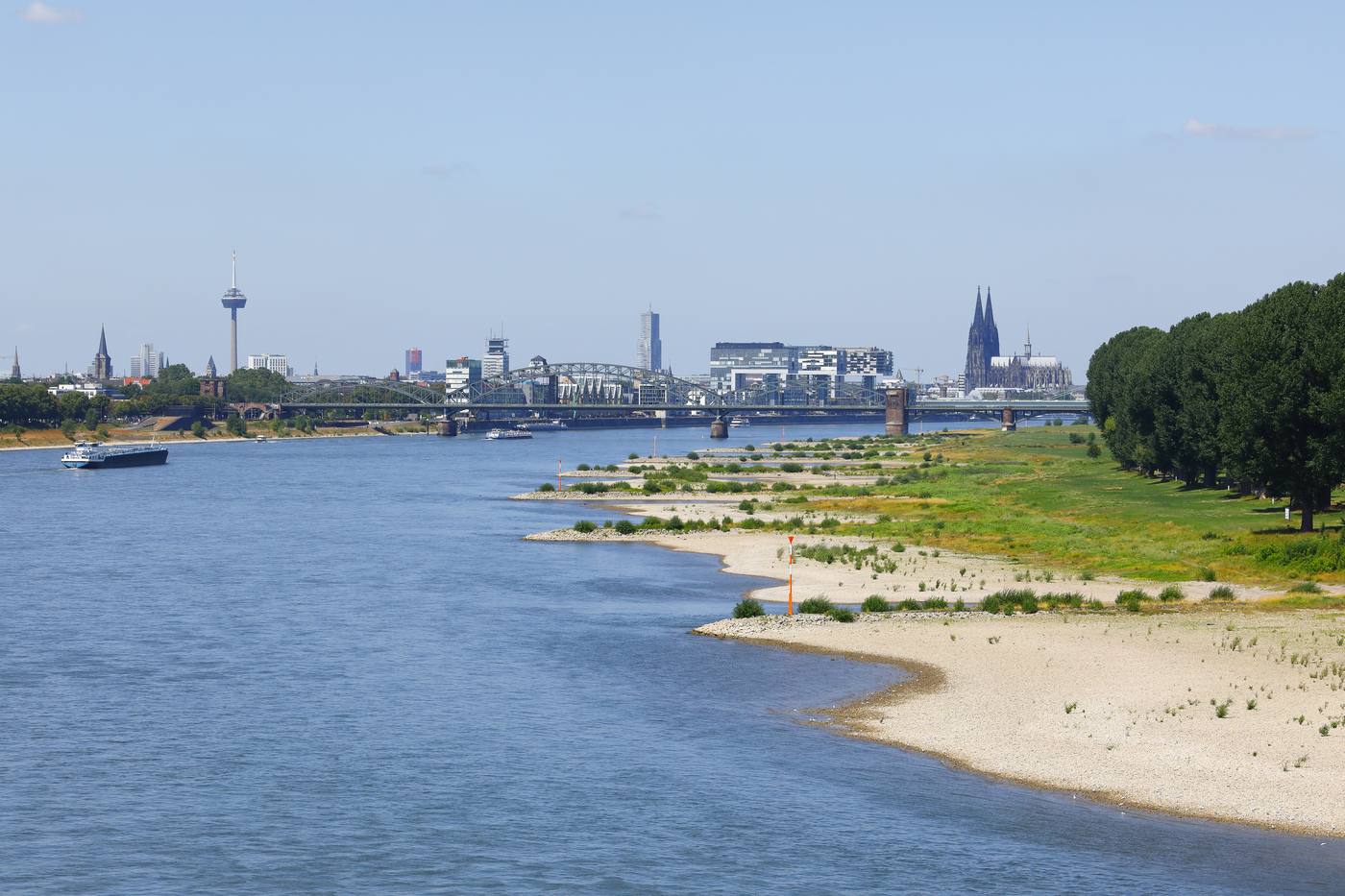
Yesterday and today it was 25 to 28 degrees with plenty of sun. Around midday power is then cheap, but in the morning and evening the price jumps as soon as the wind drops.
Gas for delivery the next day cost € 79.84 per MWh on Monday 21 September. From Saturday 26 to Monday 28 September it was € 71.66, as low as in early September. Today gas costs € 73.70. Yesterday (29 September) gas for delivery next month became more than 5 percent cheaper on the exchange within a single day.
The gas price for delivery the next day, per day from 1 August to 30 September. After the peak of € 83.94 on 15 September the price fell for two weeks in a row.
That same Tuesday the oil price also fell sharply. Much more oil is coming out of the Middle East again: exports are at their highest since the war with Iran began. Saudi Arabia is exporting oil again through its pipeline to the Red Sea, the United States is releasing up to 40 million extra barrels from its Strategic Petroleum Reserve (SPR), the country's strategic oil stockpile, and President Trump said the war will soon be over. As a result the market sees less chance of new shortages, and that feeds through into the gas price.
The first is Qatar. Qatar is one of the largest suppliers of LNG, natural gas that has been liquefied at 162 degrees below zero so that it can be transported by tanker. After the attack on the Qatari LNG plants in March, about 17 percent of capacity is out of action. This week Qatar told buyers in Italy that they will receive no cargoes until early December, and buyers in Pakistan and Bangladesh until the end of November. LNG tankers from Qatar are sailing through the Strait of Hormuz again, but far fewer than before the war. And the strait is still not safe: on the evening of 28 September an oil tanker was hit there, probably by a projectile. The fire was put out and the crew is unharmed.
The second is China. China bought about 5.3 million tonnes of LNG in September, 8 percent less than a year earlier. LNG is currently too expensive for Chinese buyers, and some of them are reselling cargoes to other countries. That is good for Europe, because those cargoes can then sail to Europe. The Chinese government is, however, now asking state companies to resell fewer cargoes ahead of the winter. If China starts buying at full strength again this winter, Europe will have to outbid China for every cargo.
Dutch gas storage stood at 58.15 percent on 28 September, which is 83.8 TWh. On the same day last year it was 70.1 percent. Across Europe it is 71.3 percent, against 82.5 percent last year. Filling was slower last week: on average 0.45 TWh per day was added, against 0.65 TWh the week before. At that pace the target of 93 TWh will not be reached until around 18 October, more than a week later than we expected last week. In addition, less gas than normal can temporarily be withdrawn from the Bergermeer storage site, about 185 GWh per day less.
Gas storage is normally filled by traders and energy suppliers. They buy gas in summer, when it is cheap, and sell it again in winter, when it is more expensive. They earn from that price difference. This year gas in summer is actually more expensive than gas for the winter, because of the war with Iran and the problems in the Strait of Hormuz. Anyone who buys and stores gas now will sell it at a loss in winter. That is why the state company EBN is filling the Norg and Grijpskerk storage sites this year. The government has set aside almost € 1 billion for this, and those costs ultimately end up with the users of the gas grid.
Minister Van Veldhoven of Climate and Green Growth wants to change that. In a letter to the House of Representatives dated Friday 25 September, the minister proposes obliging energy suppliers to keep part of the gas they supply to small consumers in storage. In addition, the government wants to get rid of the European filling targets in Brussels. Those are based on how much storage a country has, and because of its past as a gas country the Netherlands has a lot of storage. Neighbouring countries such as Germany and Belgium draw gas from Dutch storage in winter, but do not contribute to filling it. The state itself only wants to keep an emergency reserve, for real shortages and not to dampen high prices. Brussels still has to agree.
Nothing changes for this winter. In the longer term, however, a storage obligation for suppliers may show up in the price of a gas contract, because suppliers will then bear the cost of storage themselves.
The state is buying 70 percent of the shares in EPZ, the company behind the nuclear power plant in Borssele. The shares come from the province of Zeeland and the Zeeland municipalities. The state is paying € 115.7 million and is also making € 119 million available to cover running costs. The other 30 percent remains in the hands of the German energy company RWE. Last week the Senate approved a change in the law, which means the plant no longer has to close in 2033. It is not final yet. To keep the plant open after 2033, it first has to be adapted and modernised. That costs money, and the state and RWE as owners still have to decide on that together. After that, the nuclear safety regulator has to assess whether the plant can safely run for longer.
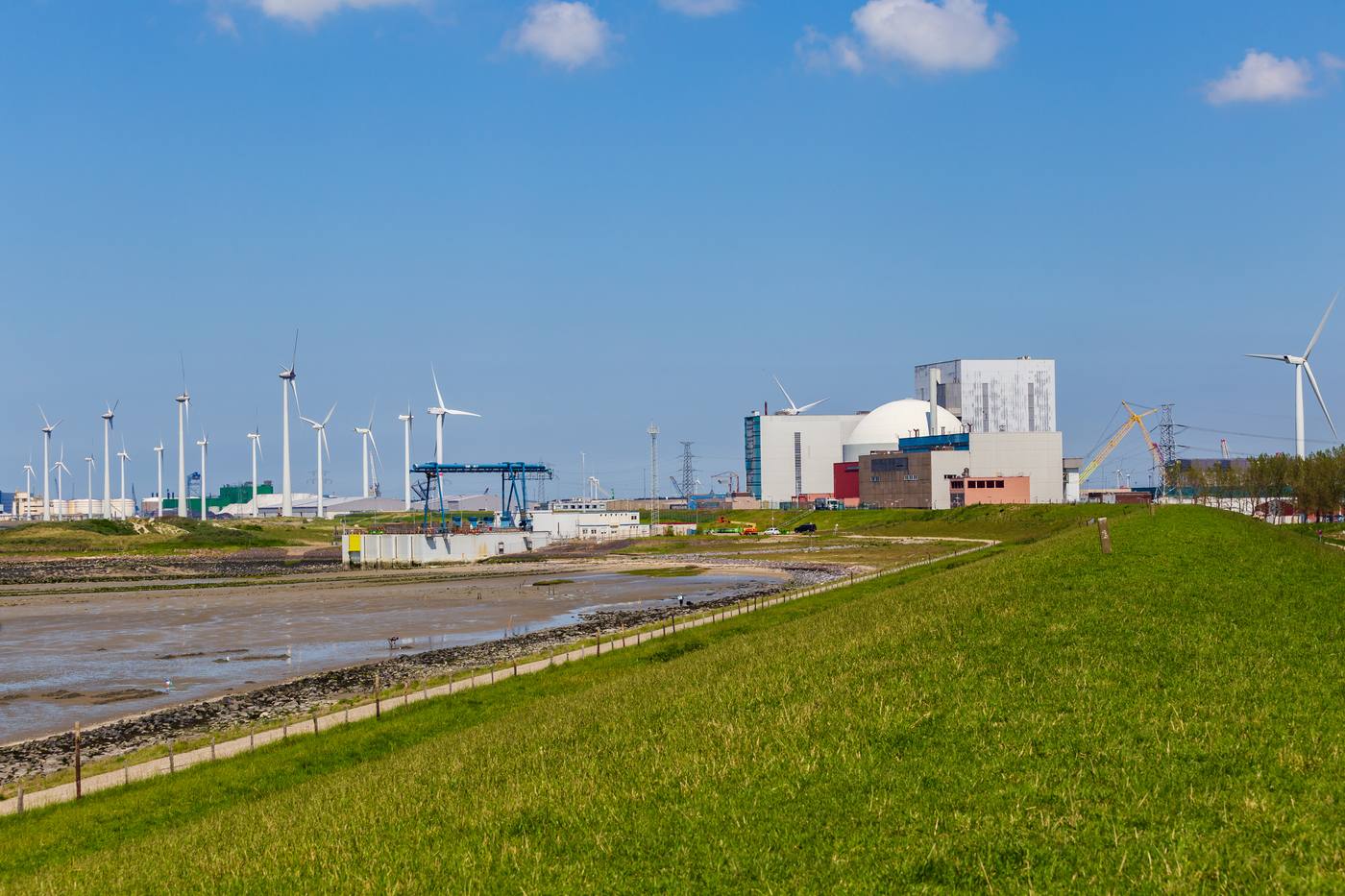
The plant supplies 485 megawatts, day and night, even when it is dark and there is no wind. Those are exactly the hours in which power is expensive now. For the power price this winter or in 2027 the decision makes no difference. For the years after 2033 it means that a gas-fired plant is needed less often to fill the gap.
A barrel of Brent, the North Sea oil on which Europe bases its oil prices, cost more than $ 104 on Monday. After Tuesday's fall a barrel of Brent cost only around $ 96. Oil exports from the Middle East came to almost 13 million barrels per day in September. That is about 80 percent of what was exported before the war.
Diesel is a different story. Russia, the world's largest diesel exporter after the United States, is extending its diesel export ban until November. Ukrainian drones hit two large Russian refineries this month. In the United States, President Trump is considering a 90-day export ban, because diesel is fetching record prices there. In the United Kingdom diesel was more expensive than ever on Monday. In Northwest Europe a diesel cargo cost on average $ 174 per tonne more than in Singapore in September. In May that difference was still $ 27.
How tight the market is shows in the routes. Fuel is now coming from South Korea to the Netherlands. South Korea has no oil of its own. It buys crude oil, turns it into diesel and other fuel in refineries and sends it around Africa to Europe. The low water in the Rhine makes things worse. Shipping diesel from Rotterdam to Karlsruhe became more than twice as expensive this month, and some chemical companies along the river have cut production, because fewer raw materials are arriving by ship.
For businesses this means transport stays expensive, even now that the oil price is falling. Anyone who runs vans or has goods transported should expect higher fuel surcharges from carriers, especially if the United States really does keep its diesel within its borders.
Power for the whole of 2027 cost € 123.60 per MWh on Monday 28 September, against € 124.02 a week earlier. Power for peak hours in 2027, from 8:00 to 20:00, fell from € 137.82 to € 134.74. Gas for 2027 became 3.3 percent cheaper, from € 57.04 to € 55.14 per MWh. Gas for 2028 costs € 36.61. The forward market is therefore moving much less than the day market. So the market expects power and gas to remain expensive next year as well.
Gas got cheaper this week because the market expects fewer new shortages. The shortages that already exist, less LNG from Qatar and gas storage that lags far behind last year, have not gone away. We therefore expect the gas price to stay high this winter and the market to remain volatile: the price can rise or fall sharply within a few days, especially if it turns cold or China starts buying again.
With power, it matters more and more in which hours you use it. In September, afternoons with prices around zero sat next to evenings of more than € 500. A business that mainly runs in the evening or early morning pays considerably more than the average. Anyone who can shift consumption to the afternoon actually benefits.
The forward market clearly shows where the pressure lies. Gas for 2027 costs € 55.14 per MWh, gas for 2028 € 36.61 and gas for 2029 € 29.03. Power shows the same picture: € 123.60 for 2027, € 95.75 for 2028 and € 85.71 for 2029. The market expects the shortages to be over in a few years, which is why the years after 2027 are now considerably cheaper than next year.
That is why we currently advise many clients not to fix everything at once. We are already fixing the years from 2028 onwards at those lower prices. For the coming period, for some of our clients we are choosing not a fixed price yet, but a dynamic contract. With that, you pay the price per quarter hour for power and the price per day for gas. If the market falls further as the shortages ease, we fix after all. Whether that suits you depends on the business: how much you use, what your consumption profile looks like, meaning at which times of the day and the year you use power and gas, and how much price fluctuation you can absorb. For a business that mainly runs in the evening, a dynamic contract is a bigger risk this winter than for a business that works during the day.
Is your contract ending in the coming months? Then a week in which the price falls is a good moment to consider whether fixing makes sense. We follow the market daily and contact clients for whom it is now favourable to buy. Not a client yet? Feel free to contact us, we are happy to take a look with you.
Power was the most expensive in September since late 2022, due to expensive gas-fired plants and low rivers. Gas became 8 percent cheaper in a week, because more oil is coming out of the Middle East again and the market expects fewer new shortages. Qatar is supplying less LNG until December and Dutch gas storage is filling more slowly. The government wants suppliers to fill storage themselves from now on, The state is taking over Zeeland's shares in the Borssele nuclear power plant, so that the plant can stay open after 2033. Oil fell below 100 dollars, but diesel remains scarce.
Subscribe to our newsletter and never miss important news from the energy market.
We use your email address only for our newsletter and market updates. See our privacy statement.
We are happy to go through your energy situation with you and show you where the opportunities are. Free of charge and with no obligation.