Gas for delivery the next day cost € 73.70 per MWh yesterday (22 September). A week earlier it was € 83.94, the highest price since late 2022. Power cost an average of € 139.11 per MWh in week 38, € 30 less than the week before. Much of that drop comes from New York. World leaders are meeting there this week at the United Nations General Assembly. The market hopes the United States and Iran will talk there about opening the Strait of Hormuz. Iran itself offered to open the strait within seven days if the US lifts the blockade of Iranian ports. On top of that came a few days of mild, windy weather. Dutch gas storage is still 13 percentage points lower than last year, and diesel is scarcer worldwide than ever.

Last week we wrote that gas was above € 80 for the first time since 2022 and that interest rates were rising as a result. A week later gas is € 10 lower. That does not solve the problem of empty gas storage. In this piece we look at why the price fell, why it cannot fall much further, what happened to power and diesel, and what that means for energy prices in the coming months.
After the peak of 15 September the gas price fell almost every day: € 80.87 on 16 September, € 76.77 on 18 September and € 73.70 on Monday. Today it stands at € 74.73. On 16 September gas for delivery next month became 7 percent cheaper within a single trading day.
The gas price for delivery the next day, per day from 1 August to 23 September. After six weeks of rises, the price fell 12 percent in a week.
Besides the possible talks between the US and Iran about the Strait of Hormuz, at the UN in New York this week, three other things played a role. Last weekend LNG ships from Qatar passed through the Strait of Hormuz again. It was warm for the time of year and very windy, so less gas was needed for heating and power. And the Netherlands and other European countries have lowered their filling target for gas storage, so there is less urgency to buy.
Only that last one is lasting. Trump's speech at the UN on Monday brought no new agreements, and the market barely reacted. A meeting between Trump and Iranian president Pezeshkian is not expected. Iran has made offers like this before without anything changing, so the market takes it with a pinch of salt. The weather can turn within a week. And Norway, now Europe's largest gas supplier, has major maintenance on its gas facilities until the end of the month, so less gas arrives on some days.
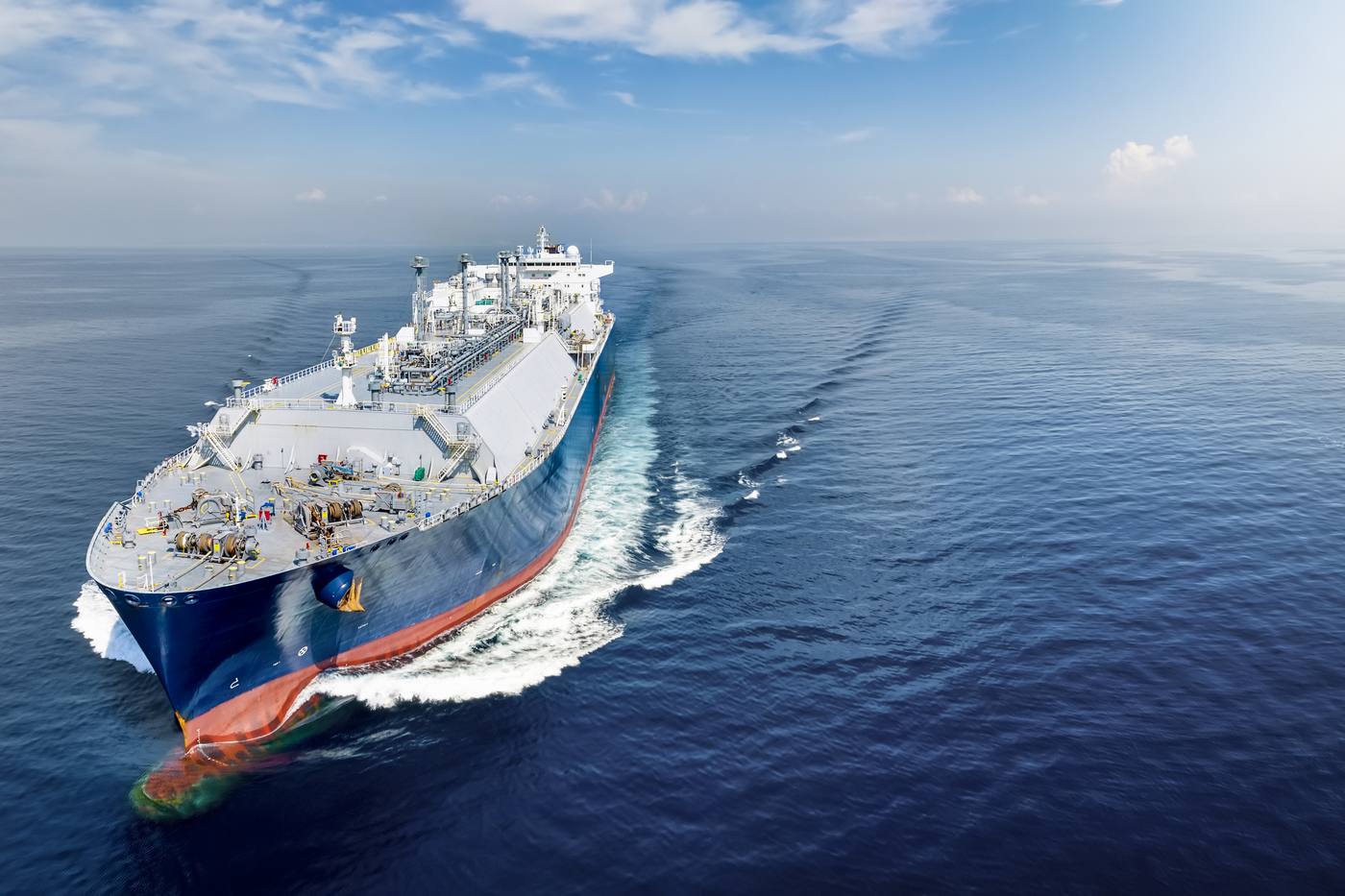
Two American LNG tankers that were on their way to Europe changed course this week. One is now heading to Brazil, the other probably to Asia. One of the two was already halfway across the Atlantic when it turned around.
An LNG tanker goes to whoever pays the most. Because little gas is coming from Qatar, Europe depends mainly on the United States for LNG, and those ships can just as easily sail to Asia or South America. As long as Europe pays more than the rest, they come here. If the European price falls, they go elsewhere. Two ships are not yet a trend, but this is how it works: a lower gas price means fewer ships, and fewer ships means gas storage fills more slowly. Then the price goes back up.
Dutch gas storage stood at 55.96 percent on 21 September, which is 80.6 TWh. On the same day last year it was 69.4 percent. Across Europe it is 70.1 percent, against 81.9 percent last year. Filling is going faster though: since 15 September an average of 0.65 TWh per day was added in the Netherlands, against 0.58 in the first half of September. At that pace the new target of 93 TWh, 64 percent, will be reached around 10 October. The old target of 115 TWh, which assumed the coldest winter in thirty years, remains far out of reach.
Germany also has low storage, but is not buying large amounts of extra gas. The operator of the German gas grid pays parties a fee to keep gas available in storage for when it is really needed, for example in severe cold. Germany has also asked the state-owned company SEFE to buy extra gas. This creates a kind of emergency reserve.
A lot depends on the winter itself. At the end of August European storage was enough for about 113 days of consumption, the lowest since 2022. The El Niño weather pattern points to a mild winter, and then Europe will manage with these reserves. In a long cold spell Europe would have to compete with Asia for every available ship.
Power cost an average of € 139.11 per MWh in week 38, against € 168.61 in week 37. In 45 hours of that week power cost more than € 200, in 13 hours the price was negative.
The power price per hour from Saturday 19 to Tuesday 22 September. A weekend with lots of wind and sun, followed by a Monday evening without wind.
On Saturday 19 September it was windy and sunny. Power cost an average of € 46.74 per MWh that day, the lowest daily price since 14 June, with six hours below zero. Sunday was similar. On Monday the wind dropped, and at 19:00 a megawatt hour cost € 570.94, the most expensive hour since 24 June. We now see quarter-hour prices above € 200 almost every day, early in the morning and in the evening. When the sun is not shining, the gas plants have to step in.
Those gas plants are expensive because of the gas price and the price of CO₂ allowances, which stayed around € 85 per tonne all week and briefly reached € 88 on Friday. On top of that, rivers are low in large parts of Europe. Hydropower plants produce less as a result, and some nuclear plants have to scale back because there is too little cooling water. Coal plants currently earn more than gas plants and therefore run more, which keeps the CO₂ price high.
On the futures market the price fell less sharply than on the day-ahead market. Power for all of 2027 cost € 124.80 per MWh on 17 September, against € 127.00 a week earlier. Power for peak hours in 2027 fell from € 135.60 to € 133.20. Gas for 2027 stayed almost the same, around € 58 per MWh. The winter months are the most expensive: power for November through February cost almost € 200 per MWh early this week.
For companies with a combined heat and power plant, costs keep rising. Because of expensive gas, expensive power and CO₂ above € 85 per tonne, the heat price for 2027 went from 29.0 cents per m³ on 9 September to 32.5 cents on 16 September. For greenhouse horticulture there was news on Budget Day: the abolition of the CO₂ levy for the sector is postponed to 2028, and in 2027 there will be a temporary reduction in energy tax of an expected € 51 million, as compensation for the obligation to blend in green gas.
A barrel of Brent oil costs around 100 dollars, against 109 last week. The drop comes from Saudi Arabia. The country expects to have the pipeline to the Red Sea, which was attacked on 10 September, half open again within a few days. Asian refineries have been told they can soon collect oil again at the Saudi port of Yanbu. Some European refineries will get no Saudi oil at all in October. The Polish refinery Orlen, which depends on Saudi Arabia for half of its oil, had to buy 16 replacement cargoes elsewhere.
Large oil tankers now avoid the southern exit of the Red Sea entirely. Not a single one has passed through since 9 September, against 63 in July. The hire of such a ship reached a record of more than 970,000 dollars per day.
The biggest shortage is in diesel. Between March and August the Middle East supplied 770,000 fewer barrels of diesel per day than a year earlier. Russia exported more than 600,000 fewer barrels per day in July and August, because of drone attacks on refineries and an export ban. Worldwide there is an estimated shortfall of about 7 percent in diesel. Slovenia is the first EU country to ration diesel: a maximum of 50 litres at a time for passenger cars. In the United States diesel costs a record of more than 6.27 dollars per gallon.
For businesses this means transport costs stay high, even if the oil price falls further. In earlier crises diesel got cheaper as soon as oil got cheaper. This time is different, because refineries are already running at full capacity, and diesel is mainly made from the heavier crude grades that are missing from the Gulf and Russia. If refineries go into maintenance this autumn, oil could get cheaper and diesel more expensive at the same time. If you run vans or have goods transported, expect those costs not to come down in the coming months, and suppliers and carriers to pass on higher fuel surcharges.
This week's drop is welcome, but its causes are temporary. And the market keeps itself in check: if the price falls too far, the LNG ships sail to another continent. We therefore expect prices for the winter and for 2027 to stay high for now, with big swings in both directions.
If your contract expires in the coming months, pay close attention. A week with a lower price can be a good moment to lock in, and such a moment can pass quickly. We follow the market daily and contact customers for whom it is favourable to buy now. Not a customer yet? Feel free to contact us, we are happy to take a look with you.
For power, what we wrote last week applies even more: it is not the average that counts, but the hours in which you use power. A week with an average of € 139 contained both hours below zero and an hour of € 571. A business that mainly runs in the evening pays considerably more than the average. A business that can shift consumption to the afternoon or the weekend can benefit from it.
Gas became 12 percent cheaper in a week. The market is counting on talks between the US and Iran about Hormuz, a few ships from Qatar passed through the strait again and there were a few days of mild weather. Dutch gas storage is filling faster, but is still well below last year. In three days power went from the cheapest day since June to the most expensive hour since June. Oil fell to around 100 dollars, but diesel is scarce worldwide and is likely to stay that way for a while.
Subscribe to our newsletter and never miss important news from the energy market.
We use your email address only for our newsletter and market updates. See our privacy statement.
We are happy to go through your energy situation with you and show you where the opportunities are. Free of charge and with no obligation.